
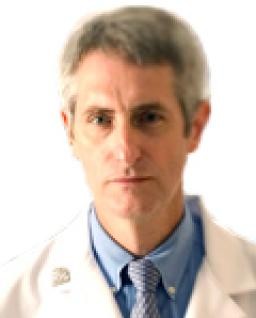
Kevin Nelson, MD
Dr. Nelson is professor of neurology at the University of Kentucky. He has conducted extensive studies of near-death experiences and their connection with low blood flow to the eyes, fight-or-flight reactions, and the onset of REM consciousness.
Difficulty Level: Average
336 pages
It was William James (1842-1910), the greatest[1] American psychologist who ever lived, who first brought the study of spiritual consciousness into science with his Varieties of Religious Experience[2] (James, 1902/2009) which still stands as classic in both the history of psychology and theological studies. Much of the book, unbeknownst to most people, was secretly autobiographical as James drew on his own private experiences of spiritual suffering and insight. Kevin Nelson, a neurologist seeks in his own way to pick up where James left off but given, he is working about 100 years after James’s death, he roots the issue—along with the nature of consciousness–deeply in contemporary neuroscience.
James determined there were five qualities of consciousness:
- It was personal
- It was private
- It was selective
- It was continuous
- Its continuity was marked by gaps or pauses
Nelson takes a jumping off point similar to James by pointing out three fundamental brain states: waking consciousness, REM sleep, and non-REM sleep. From this, with evidence based on a number of case vignettes of people who had near-death experiences, he theorizes that spiritual experience—whether it is entering an ecstatic state of bliss or talking to dead relatives outside the doorway to higher spirit life—comes from some kind of “in-between” borderland state of consciousness which we have not discovered. This state of spiritual consciousness appears to take place in the lower brain regions.
If Buddha had been in an MRI machine and not under the Bodhi tree when he attained enlightenment, what would we have seen on the monitor? To support his points, he gives a litany of stories of patients and research subjects, results from brain scan analyses, insights from evolutionary biology, and moving examples of spiritual transcendence from literature. Given all of this, Nelson goes further to hypothesize that in every human brain there is a drive for spirituality much like the survival instinct or the sex drive. a physical brain origin and that it may be as much a part of our biological nature as our sex drive or survival instinct. He even goes so far as to speculate that animals including mammals, reptiles, and birds—as they have advanced nervous systems–may also be able to have spiritual experiences as well.
Closing Thoughts
This is really a great book and, like most science authors who try to delve into the quasi-mystical nature of human experience, he tends to speak more from his neurological knowledge than from religious literature. But this, I think is a strength as the narrative and thinking are always solidly grounded. Plus, even though Nelson is a product of the materialistic/physicalistic tradition, he in no way demeans or belittles subjective, altered states of consciousness and the meanings given by the people who had them. If you’re into spiritualism and neurology as I am, this is highly recommended.
Paul Shane, Ph.D., LMT
References
James, W. (1902/2009). The Varieties of Religious Experience: A Study in Human Nature. Adelaide, Australia: The University of Adelaide.
Nelson, K. (2012). The Spiritual Doorway in the Brain: A Neurologist’s Search for the God. New York, NY, Plume.
[1] In my deeply learned and unshakeable opinion.
[2] For an online copy, see https://csrs.nd.edu/assets/59930/williams_1902.pdf