
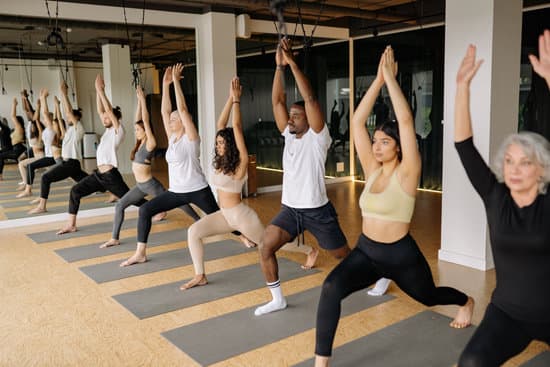
The modern yoga studio here in the West appears to be modelled on the dance studio: a large airy space, natural wood floors, and oftentimes a wall of mirrors. According to the 2016 Yoga in America survey, 48 percent of yoga practitioners in the U.S. attend yoga classes in gym settings while 45 percent go to yoga studios (Ispsos Public Affairs, 2016). The mirrors are intended to help the yogis check their postural alignment during their asanas. This is a very useful feature, but it may bring some negative effects along with it.
A study of 97 college-age women participated in a control group study of practicing yoga in a mirrored studio versus a non-mirrored one. Researchers found that the mirrored environment caused significantly more social physique anxiety on the part of students via appearance comparisons. That is, students naturally compared their bodies and capabilities to the other students in the room. Those that found themselves wanting—either being in worse physical condition or less advanced in their flexibility experienced body image disturbance.
It’s only human to look at others and compare ourselves to them. Unfortunately, if you engage in what is known as an upward comparison with someone better than you, well, prepare to be disappointed. On the other hand, making downward comparisons to others in worse shape than you may elicit a brief feeling of pleasure and relief, but ultimately, it doesn’t get you anywhere and is pretty much meaningless. The truth is that there will always be someone better than you and somebody worse. It’s just the nature of the universe.
Those students with troubled emotional histories, such as disordered eating, are more susceptible to feeling bad about their bodies. But, most importantly, the students in the study reported body image improvements over time. This makes a great deal of sense given that one of the many benefits of yoga is an improved body image.
Body image is extremely fragile and very plastic. It is vulnerable to body image threats as posed every day by media images and critical friends and family. People need to work on shielding their body image from everyday attacks whether that is from pictures on social media of perfect bodies or mirror-checking in a yoga studio. Yes, but how is one to do this? Four coping strategies have been identified by body image researchers to manage body image-related threats.
- Appearance fixing is the anxious hiding the body or altering one’s body. This is a very typical behavior and often seen in those people with unhealthy body images. This tactic is practical for obtaining immediate results in quelling body image-related anxiety and stress, but is certainly not a long-term solution by any means.
- Avoidance is withdrawing from social encounters where one might be seen and their body anxieties and shame triggered. Persons who frequently use avoidance and/or appearance fixing behaviors are far more dissatisfied with their bodies. Qualitative studies conducted among adolescent girls, boys, and college women found that avoidance and appearance fixing strategies were the most commonly used tactics. Again, avoidance is only of short-term value and is certainly does not solve the problem.
- Positive rational acceptance is achieved by being mindfully aware of one’s negative thoughts and emotions while engaging in positive self-talk. Persons who accept themselves with self-compassion are less likely to base the worth of their identity on their body appearance and have fewer body image disturbances. They enjoy higher self-esteem, healthier eating, and greater affirmation from family and friends. Even though positive rational acceptance leads to a healthy body image and better psychosocial functioning, it is the coping mechanism people use the least. This is a very healthy, viable, and practical tactic.
- Body image flexibility is the positive embracing of one’s negative body experiences. It is a hybrid of Buddhist philosophy and Western behaviorism. Person with strong body image flexibility consciously accept their negative thoughts, feelings, and sensations without trying to change, suppress or avoid these experiences. Body image flexibility, just like positive rational acceptance, is an essential feature of positive body image. Again, a very powerful tactic to protect body image integrity.
The key here, it seems to me, is if you’re going to compare yourself to others then do so with self-compassion and a healthy body image. Techniques (c) and (d) take practice with mindful application. Then, over time, as one becomes more aware, more sensitized, and more compassionate it transforms into a body-based attitude and becomes automatic. I recommend that the interested reader check out the references below for more information. And, of course, trying a little yoga is a very good idea.
Paul Shane, Ph.D., LMT
Director, Academic Content
___________
References
Bailey, K., Lamarche, L., & Gammage, K. (2014). Coping with body image threats among college women: The swimsuit problem. International Journal of Psychological Studies 6, p. 19–30.
Cash, T., Santos, M., & Williams, E. (2005). Coping with body-image threats and challenges: Validation of the Body Image Coping Strategies Inventory. Journal of Psychosomatic Research 58, p. 191–199.
Frayeh, A. & Lewis, B. (2018). The effect of mirrors on women’s state body image responses to yoga. Psychology of Sport & Exercise 35, p. 47-54.
Ipsos Public Affairs (2016). The 2016 Yoga in America study. Retrieved from: https:// www.yogaalliance.org/Portals/0/2016%20Yoga%20in%20America%20Study %20RESULTS.pdf.
Kowalski, K., Mack, D., Crocker, P., Niefer, C., & Fleming, T. (2006). Coping with social physique anxiety in adolescence. Journal of Adolescent Health 39, p. 275.e9–275.e16.
Rogers, C., Webb, J., & Jafari, N. (2012). A systematic review of the roles of body image flexibility as a correlate, moderator, mediator, and in intervention science (2011-2018). Body Image 27, p. 43-60.
Sabiston, C., Sedgwick, W., Crocker, P., Kowalski, K., & Mack, D. (2007). Social physique anxiety in adolescence: An exploration of influences, coping strategies, and health behaviors. Journal of Adolescent Research 22, p. 78–101.
Sandoz, E., Wilson, K., Merwin, R., & Kellum, K. (2013). Assessment of body image flexibility: The Body Image-Acceptance and Action Questionnaire. Journal of Contextual Behavioral Science 2, p. 39–48.
Smith-Jackson, T., Reel, J., & Thackeray, R. (2011). Coping with “bad body image days”: Strategies from first-year young adult college women. Body Image 8, p. 335–342.
Tylka, T. & Wood-Barcalow, N. (2015). What is and what is not positive body image? Conceptual foundations and construct definition. Body Image 14, p. 118-129.
Webb, J., Butler-Ajibade, P., & Robinson, S. (2014). Considering an affect regulation framework for examining the association between body dissatisfaction and positive body image in Black older adolescent females: Does body mass index matter? Body Image 11, p. 426–437.