
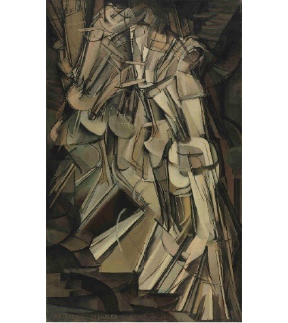
Our bodies communicate a dazzling number of meanings at any single moment. Anthropological studies point to the fact that the body as at least two dual meanings: the body is both an agent–meaning it is the physical form that allows the self-expression of the conscious human being–and it is a symbol in that it is assigned many meanings by both the person and the culture. This includes the meanings assigned to various body areas and parts by the person or by sociocultural beliefs and rules. The body is imbued with dozens of symbolic meanings and leads itself to oftentimes being used as a psychic projection screen upon which the self and others project their own meanings, fears, and desires and also as a personal billboard for public messaging as in the case of fashion statements and body modifications (Reischer & Koo, 2004).
We have imposed layer upon layer of psychological and social symbolism on our body parts and the body parts of others. Ideas, images, beliefs, and associations abound on the areas that give our bodies structure and allow for a multitude of functions. This living symbol system we call a “body” and its parts is imbued with positive and negative associations which color our thinking, perceptions, and behaviors. “The body, therefore, with all its organs, attributes, functions, states and senses, is not so much a biological given as a social creation of immense complexity, and almost limitless variability, richness and power” (Synott, 1993, p. 4). As embodiment is the foundation of the self, any changes in the body will bring concomitant changes in self-identity. Occurrences such as disease, sudden trauma, cosmetic modifications, the experiences of interpersonal interactions, emotional responses, and the like all bring about shifts in self-concept. The body is both a self-conscious agent capable of intention and motion as well as a living symbol; a screen upon which are inscribed symbolic messages about the self and his or her relation to the world.
Body perspectives range from the biological to the psychological to the sociological[1] to the cultural, historical, magical and mystical. It will be seen here that the body—your body, my body, every body—is ultimately an experiential body; a body filled with metaphorical images and meanings.[2]
Body as Soul
 In Aristotle’s view, the soul (psyche or mind) and body were a single unity known as a “synolon;” the substantial form of this bipartite unity. Aristotle believed that matter as a substance is a different quality than that of its form, but the two together result in a substance plus its form. He applied this reasoning to thinking about the soul and body. The body is physical matter while the soul is its form and together create the human being. More so, the soul is not just the form of the body, but also the efficient and final causes of life. By this Aristotle meant that the soul is the animating agent of the body and that while the soul and the body are different in essence, they are united in the shape and contours of the body and its tissues. The body is the organization of organs while the soul is the organizing principle of the body. This belief that all individual substances are composed of matter (hyle) and form (morphe) is known as the hylomorphic doctrine (Brennan, 1941). Hylomorphism states that human beings are composed of structured materials. The organization of these materials gives us life and shapes our being. Hylomorphism has two very important implications for Somatic Psychology and Neurophilosophy. First, the idea of a synolon body-soul is an ancient precursor to the contemporary idea of the human being a holistic bodymind. Second, it implies the mechanism of Emergence which is the idea that once non-living things reach a level of organization complex enough then consciousness will spontaneously appear. This is one possible answer to the mind-body problem (Jaworski, 2011).
Body as Cartesian Machine
 The concept of the body-as-machine is known by other more accepted code names such as the anatomical body, the natural body, or just the physical body. In sociology and health education, it is known as the medicalized body (Watson, 2000). The machine concept views the body as a living mechanism whose animation depends on the efficient operations of its component parts. This is the body of modern science and medicine and often in our own daily experience as well. That is, while most of us would probably never think of ourselves as living machines there is something rather “machine-like” about our bodies and our behaviors and we often address our body’s daily problems and needs as we would be adjusting a machine. We provide it fuel, keep it clean, protect it, alter its performance by exercise or training, and repair it when a part malfunctions, and so on. The body’s operations run largely on an unconscious and automatic manner and we only become aware of them if there is a malfunction of some kind.
Descartes heralded the dawn of modern philosophy in 1641 with his Meditations on First Philosophy; a work in which he sought a new and solid ground for human epistemology based on the unquestionable reality of his own thinking. He did so using the method of radical doubt to conclude that the only thing in his consciousness that may not be questioned is his own consciousness: “I am thinking, therefore, I exist.” The problem is that with a single flourish, Descartes absolutely and irreversibly alienates the mind from the body. He does this in two ways. First, he argues that mind and body are of two entirely different substances: res cogita which is immaterial and does not occupy space versus res extensa which is material and does occupy space. Descartes very clearly states in Part IV of his Discourse on Method that his own “I” is absolutely distinct from his body and can exist without it. Here is the essence of what has come to be called “Cartesian dualism” or, more formally, the “incorporeality thesis” (Cottingham, 1992).
Body as Container

Overall, and speaking from the most fundamental view, the experience of being a body is to be aware of an inside and an outside. This inner-outer dichotomy is often thought of as a kind of container and speaking both psychologically and embryologically, it is not an unreasonable image. From a strictly physical point of view, the image of the body as a container is reflected in how the human body forms embryologically. By the end of the fourth day after conception, the zygote has undergone numerous cell divisions and, as it continues to migrate through the uterine tube, these divisions continue. At the 32-cell stage, the zygote—now called the morula—receives an influx of a glycogen-rich secretion (“uterine milk”) and becomes a fluid-filled cavity called a blastocyst cavity. The cells continue to organize into a sphere of two layers: an inner layer which will eventually become the embryo and the outer layer, or trophoblast, which will develop into the fetal portion of the placenta. This blastocyst remains free within the uterus for about two days before it finally attaches to the uterine wall (Tortora & Grabowski, 2003). And, after birth, the notion of the body as an internal space continues at a higher level of complexity and experience. The design of the body is as an assemblage of solids which create spaces for liquids, gases and other solids to be processed. Keleman (1985) observes that the formation and growth of the body follows a general organizing principle that involves a body plan shifting from a cell to a ball to a tube which eventually increases in complexity into layers, compartments, pouches, diaphragms, and bony levers.

The body-as-container is an often-used metaphor in contemporary psychotherapy, especially in the experiential, body-based modalities. It is interesting to note that the original body image research focused on the nature of the body boundary; the psychic surface between a personal, inner space versus the public, external world. To do so, it initially used projective techniques to measure the degree of permeability vs. impermeability between the inner and outer worlds. The exterior of the body is what can be publicly seen and touched while the interior is a psychic terra incognita absolutely unknown to the outside world and impossible to enter. Things are put inside of one’s body and other things come out; the outside world can touch the body, but never quite enter; certain things are hidden inside the body from the outside world. The body is an experiential container housing the stuff of life and mystery: consciousness itself.
Body as Organism
 The early experimentalist psychologists assumed the mission of rescuing psychology from the “armchair philosophers,” as E.W. Scripture (1864-1945) called them and the first experimental psychology laboratory was established in 1879 to begin doing so.[3] These early scientific psychologists dreamed of making Psychology a rigorous science on par with physics or chemistry.[4] And that meant focusing at first on the psychophysical processes of sensation and using scientific measurement techniques and protocols. At first, subjective mental processes were studied, but these were soon abandoned as they could be accurately measured in favor of measurements of behaviors. The body-machine view entered the world of this then-new scientific psychology with the stimulus-response reflex conditioning principles of Ivan Pavlov (1849-1936) which were later elaborated and popularized by John B. Watson (1878-1958). That is, Watson exiled consciousness from the study of psychology in favor of observable, measurable behaviors. Watsonian behaviorism was later refined by B.F. Skinner (1904-1990) into “radical behaviorism.” Skinner went so far as to argue that since the behavior of humans was a product of random conditioning,[5] behavioral psychologists should be given the power to mold society for the better using behavioral conditioning. This view dominated American scientific psychology, and a good part of American clinical psychology, for almost one-half century.
Because a human being is nothing more than a biological organism the body was viewed as a quasi-physiological entity that was sometimes thought of as human and, at other times, thought of as being a mere animal, but mostly the body was just an abstraction; a collection of responsive organic parts; an organic mechanism for sure, but a mechanism nonetheless. One consequence of this was that the body came to be viewed as a mere vehicle or container of the mind. As such, the body was no longer the source of consciousness and feelings, just the mere scaffolding of its expression (Stam, 1998).
The human-as-organism concept is grounded in the physiological principle of homeostasis which was first proposed by Walter B. Cannon (1871-1945) in 1932. The human-as-organism means the body sans all neural tissue although the brain is a key part. It has a variety of parts that include a bony skeleton powered by muscles and articulated by joints and contains various organs. The boundary of the organism is the skin. Every living system is in constant change moving from state to state in response to its external contact with the environment and to internal contact with its own operations. This turns the Cartesian view from the body being an inanimate machine towards the body being a biological system. It’s a less mechanized view of the biological machinery, but still has some mechanical overtones (Damasio, 1994).
Further complicating the view of the body-as-organism was the influx of cybernetic thinking and computer technology in the late 1940s. Humans and their bodies were defined as “intermittent correction servomechanisms,” but eventually this absurd term gave way to thinking of the bodymind as an information (energy) system. This move accomplished several things. First, it raised the human (and his or her body) to a new level of abstraction and, second, it ensconced this abstraction in an interactive hierarchy of system levels. As Stam (1998) put it, “The body in cognitive science has evolved into the sexless hull of the robomind, the complex machinery of information systems brought to its highest level of abstraction in the human facsimile” (p. 4).
Body as Shadow
 Conger (1988), in his attempt to unite Jungian thought with Reichian therapy, proposes that the body is on some level equivalent with Jung’s concept of the “shadow” side of the human psyche. Jung saw the psyche as composed of both conscious and unconscious sides with the conscious side devoted mainly to dealing with the world and its affairs via the “persona,” the external side of the person shown to the world. The unconscious was organized as having three sides: a male side (animus), a female side (anima), and a shadow side. As the unconscious mind organizes itself into opposing polarities of desires it becomes the reservoir of hidden, repressed conflicts and energies that the conscious mind would find too disturbing. And so, the shadow is the polar opposite of the persona holding such things as unacceptable desires, negative emotions, and impulses.[6] The shadow has been described as the pre-human part of our evolutionary history containing all of the animal instincts and drives. Like all archetypes, it seeks to manifest itself by projecting its shadowy contents out onto the exterior world in the form of devils, demons, or monsters; we see it manifest itself in our own selves as the behaviors of others that we find abhorrent, hateful, or frightening (Olson & Hergenhahn, 2011). The shadow acts as a buffer between the conscious and unconscious sides of the mind and is thought of as the gatekeeper that controls what enters and exits the unconscious (Cloninger, 2000).
As psychic life, and life in general, is played out in a tension of opposites, the positive side is symbolized in the images of light, goodness, morality, order, beauty, science, balance, Apollonian thought, and the right hand and side of the body. The shadow side, in contrast, is hidden, primitive, anarchic, bad, uncivilized, unpredictable, unstable, Dionysian sensuality, perverse, sinful, magical, deadly, and the left hand and side of the body (Conger 1988). The shadow archetype itself is the reservoir for bad, unwanted aspects of the bodymind, but it is also a source of intuitive instincts and creative impulses; it is potentially both destructive and constructive.
Body as Neural Paradox
 Every sensation begins as a neural signal from a sensory receptor which then travels to the spinal cord and up to the thalamus and then to the higher cortical areas. Every conscious experience that we have at any single moment—including our sense of embodiment—is a result of this neural process. Embodied consciousness is a neural event and, if the neural processing is disrupted, parts of our bodies disappear from our awareness. This is what makes the human nervous system so extraordinarily wondrous in that it can synthesize millions electrical impulses into an actual conscious experience. This ability seems almost magical and it prompted the British philosopher, Thomas Huxley (1825-1895), to famously ask, “How is it that anything so remarkable as a state of consciousness comes about as a result of irritating nervous tissue, is just as unaccountable as the appearance of the djinn when Aladdin rubbed his lamp in the story?”
The crux of the matter is that consciousness seems to directly experience the world without any apparent intermediate processing. This view is called naïve realism or direct realism and, whenever I look at my cat, it feels to me something that is solid, bounded, and existing “out there” in three-dimensional reality when in truth the figure of my cat is actually a neural reconstruction of that reality.
The body is a large part of our moment-by-moment consciousness and, as it appears in conscious awareness, it is a function of the nervous system. An endless stream of electrical impulses run through it carrying information from the lower neural regions to the higher ones. From a neurological point of view, the body only exists in consciousness as a representation in neural form; it is nothing more than a neural impression; a facsimile of what we are; counterfeit copy of reality. Consciousness, according to science and philosophers of materialism, has a biological basis and exploring this basis may be the last frontier of science (Kandel et al., 2012). The neurophysiological evidence shows that there are many types of body representations that make up embodied consciousness and are used to guide physical actions.[7]
***
These are just preliminary notes for a longer work on the many experiential meanings of the body. If you are interested in this topic being addressed in more depth, please let us know so we may inform you when that book is available.
Until that time, I leave you with some parting questions: “What is the metaphor for your body?” and “What does your body contain?”
Paul Shane, Ph.D., LMT
Director, Academic Content
___________________________________________________
References
Brennan, R. (1941). Thomistic psychology: A philosophic analysis of the nature of man. New York, NY: The MacMillan Company.
Cloninger, S. (2000). Theories of Personality: Understanding Persons, Third Edition. Upper Saddle River, NJ: Prentice Hall.
Cottingham, J. (Ed.) (1992). The Cambridge Companion to Descartes. Cambridge, UK: Press Syndicate of the University of Cambridge.
Damasio, A. (1994). Descartes’ error: Emotion, reason and the human brain. New York, NY: Putnam.
—————– (2000). The feeling of what happens: Body, emotion and the making of consciousness. London, UK: Heinemann.
—————– (2010). Self comes to mind: Constructing the conscious brain. London, UK: Heinemann.
Frick, R. (1982). The ego and the vestibulocerebellar system: Some theoretical perspectives. Psychoanalytic Quarterly 51(1), p. 93-122.
Graziano, M. & Botvinick, M. (2002). How the brain represents the body: Insights from neurophysiology and psychology. In W. Prinz & B. Hommel (Eds.), Common Mechanisms in Perception and Action: Attention and Performance XIX, Oxford, UK: Oxford University Press, pp. 136–157.
Hauck, D. (1999). The Emerald Tablet: Alchemy for Personal Transformation. London, UK: Penguin Books.
Kandel, E., Schwartz, J., Jessell, T., Siegelbaum, S., & Hudspeth, A. (2012). Principles of Neural Science, Fifth Edition. New York, N Y: McGraw-Hill Professional Publications.
Keleman, S. (1985) Emotional Anatomy: The Structure of Experience. Berkeley, CA: Center Press.
Legrand, D., Grünbaum, T., & Krueger, J. (2009). Dimensions of bodily subjectivity. Phenomenology and Cognitive Science 8, p. 279-283.
Malacrida, C. & Low, J. (2012). Sociology of the Body: A Reader, Second Edition. Oxford, UK: Oxford University Press.
Malinson, J. & Singleton, M. (Eds.) (2017). Roots of Yoga. New York, NY: Penguin.
Olson, M. & Hergenhahn, B. (2011). An Introduction to Theories of Personality, Eighth Edition. Boston, MA: Prentice Hall.
Reischer, E. & Koo, K. (2004). The body beautiful: Symbolism and agency in the social world. Annual Review of Anthropology 33, p. 297-317.
Skinner, B. (1971). Beyond Freedom & Dignity. New York, NY: Knopf.
Stam, H. (Ed.) (1998). The Body and Psychology. London, UK: Sage Publications.
Synott, A. (1993). The Body Social: Symbolism, Self and Society. London, UK: Routledge.
[1] Sociologists view the body in a great many ways: gendered bodies, transgressive bodies, risky bodies, reproductive bodies, children’s bodies, working bodies, disabled bodies, sporting bodies, racialized bodies, consumer bodies, aging bodies, and postmodern bodies (Malacrida & Low, 2012).
[2] See Legrand, Grünbaum, & Krueger (2009) for a fuller discussion.
[3] Edward Wheeler Scripture (1864-1945) was both a physician and a psychologist. He founded the experimental psychology laboratory at Yale University, directed the Vanderbilt Speech Clinic at Columbia University and was one of the founders of the American Psychological Association. The early influence of his obvious disdain for philosophizing about psychology should not be underestimated.
[4] While it may sound insulting, which is not my intention at all, it is safe to say that from the very moment of its birth that Psychology has had a life-long and mostly unconscious inferiority complex toward the other sciences.
[5] See B.F. Skinner’s Beyond Freedom and Dignity (1971) for a sense of the Cartesian machine philosophy applied to the psycho-behavioral regulation of individuals and even entire nations.
[6] The classic image of the shadow side versus the external persona is the “Dr. Jekyll/Mr. Hyde” polarity in the tale by Robert Louis Stevenson (1886). The idea of the story originally came to Stevenson in a dream. The Picture of Dorian Gray by Oscar Wilde (1890) is another good example of the body as psychic shadow.
[7] Until recently, the neural body representations problem had been investigated by two separate research approaches: neuropsychology and neurophysiology. The neuropsychological camp emphasizes the multisensory nature of body representation and has shown that vision, touch, and proprioception combine with one another and are cross-referenced within a cognitive map. Its work has been mainly with normal and brain-damaged human subjects. The other approach by neurophysiologists has focused almost exclusively on proprioception and the control of movement. Its work has been directed solely at the brains of monkeys. These two approaches have now joined together in recent years to share information and approach problems in tandem (Graziano & Botvinick, 2002). The lion’s share of research evidence comes from brain lesion studies of the peripheral and central nervous systems. Lesions can alter or eliminate body representations and produce disorders such as anosognosia (the denial of a symptom), denial of ownership of a body part, and the hatred of hemiparetic limbs (misplegia), the addition of supernumerary limbs, and changes in the size and shape of phantom limbs. These disorders mainly appear after damage to the right cerebral hemisphere.